

RAM 1500 New vs. Ford F-150: Which Truck Wins in 2025?
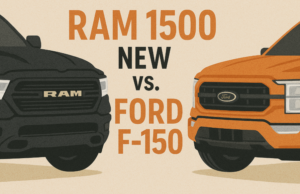
Every year, truck enthusiasts all across California face the same classic dilemma: Which full-size pickup should I buy? And in 2025, the two names dominating that conversation are still the RAM 1500 and the Ford F-150. These two trucks are American icons at this point. They’ve been refined, reinvented, and pushed to new limits year after year, becoming more than just work vehicles. For many people, they’re mobile offices, weekend companions, family haulers, and adventure machines.
Trying to choose between the two can feel a lot like comparing two heavyweight champions at the top of their game. Each brings its own strengths, its own personality, and its own appeal. And while brand loyalty often runs deep in the truck world, the real question for 2025 isn’t just, “Which truck is better?” It’s:
“Which truck is better for you?”
Whether you’re towing up and down the California coast, navigating Orange County traffic, hauling equipment for work, or simply looking for a reliable, comfortable daily driver, the way you use your truck matters.
This guide breaks down how the 2025 RAM 1500 stacks up against the 2025 Ford F-150 in real-world scenarios. We’ll cover performance, towing, comfort, interior quality, tech features, highway behavior, fuel economy, and overall value. By the end, you’ll have a clear picture of where each truck shines and whether the RAM or the Ford aligns more with your lifestyle.
Let’s dive in.
Key Specifications Compared
Here’s a simplified look at how the two trucks stack up numerically when properly equipped:
| Specification | 2025 RAM 1500 | 2025 Ford F-150 |
|---|---|---|
| Max Towing Capacity | ~12,750 lbs | Up to ~13,500 lbs |
| Max Payload Capacity | ~2,300–2,360 lbs | Up to ~2,440–2,455 lbs |
| Base Engine Power | 3.6L V6, 305 hp | 3.3L V6, 290 hp |
| Entry Price | Slightly higher depending on trim | Slightly lower on some trims |
| Ride Comfort Focus | High; luxury-like | Moderate; comfort increases with trim level |
Note: Actual towing/payload depends on configuration, bed length, axle ratio, and tow-package options.
Specs tell part of the story but not the whole story. To truly understand the differences, you need to look at how these trucks behave in the real world.
Performance, Towing & Hauling: Where Power Matters Most
Towing & Payload Strength
For many California drivers, towing capability doesn’t just look good on a spec sheet — it becomes part of daily life. Between hauling boats to Newport, transporting campers to Big Bear, or moving equipment around job sites, towing strength matters.
Here’s the truth:
Ford F-150 Still Leads in Maximum Towing
When configured with the right engine and the Max Tow Package, the 2025 F-150 can reach towing capacities of around 13,500 pounds. This puts it slightly ahead of the RAM 1500. If you’re someone who regularly hauls large trailers or you use your truck for commercial work that extra margin can make a noticeable difference.
RAM 1500 Still Offers Plenty of Muscle
While the RAM may fall a bit short of Ford’s maximum numbers, it still tows up to about 12,750 pounds, which is more than enough for most everyday needs. Think mid-size campers, utility trailers, recreational boats, dirt bikes, side-by-sides — all comfortably within RAM’s range.
The Real Takeaway
If you frequently push your truck to its absolute limits, Ford’s extra capacity may give you peace of mind.
If you tow occasionally, or moderately, RAM gives you more than enough capability without sacrificing ride comfort.
Drive Feel, Comfort & Ride Quality
This is where RAM has built its reputation and where it often pulls ahead in real-life satisfaction.
RAM 1500: The Smooth Ride King
Many truck reviewers, owners, and industry experts describe the RAM 1500 as one of the most comfortable pickups ever made. The suspension is forgiving. The cabin is quiet. The layout feels almost SUV-like in day-to-day driving. If you spend a lot of time in your truck — commuting, long-distance travel, errands, these qualities start to matter a lot more than a few hundred pounds of towing difference.
Ford F-150: Durable, Functional, Work-Focused
The F-150 isn’t uncomfortable — not by any means. Higher trims like Platinum, King Ranch, or Limited deliver impressive interiors. But Ford’s baseline configurations lean more toward rugged utility. The ride can feel firmer, especially when the bed is empty.
Who Wins This Category?
If comfort is a top priority, RAM wins.
If durability and work-focused toughness come first, Ford maintains an edge.
Interior, Tech & Cabin Experience — A Big Deciding Factor
Modern pickups are no longer just utilitarian machines. They’re tech hubs with massive touchscreens, advanced driver assistance systems, and creature comforts that rival luxury SUVs.
Where RAM Shines
✓ Softer materials
✓ More premium feel
✓ High-end aesthetics
✓ Comfortable ergonomics
✓ Quiet cabin
✓ Luxury-like trims (especially at higher levels)
RAM built its interior to feel warm, refined, and inviting. Many drivers step into RAM and immediately sense that this is a vehicle engineered around human comfort, not just functionality.
Where Ford Stands Out
✓ Wider variety of trim levels
✓ Big touchscreens and Ford’s SYNC system
✓ Work-friendly interior layouts
✓ Plenty of utility-focused options
✓ Configurable upfit packages
✓ Premium trims for luxury buyers
Ford’s tech ecosystem is strong, and their work-truck trim options are unmatched. You can “build your F-150” for almost any setting like construction, ranching, commuting, towing, or luxury travel.
Interior Winner?
Truck buyers seeking luxury, comfort, and premium feel → RAM 1500
Buyers wanting choice, flexibility, work-truck functionality → Ford F-150
Fuel Economy & Efficiency — Important for California Drivers
California drivers often cover long distances from Orange to Riverside, between LA and San Diego, or from inland regions to the beaches. Fuel efficiency becomes a big part of ownership costs.
In independent tests:
F-150 Highway Mileage
≈ 20 mpg highway
≈ 16 mpg combined
RAM 1500 Highway Mileage
≈ 18 mpg highway
≈ 16 mpg combined
Ford earns a slight edge on highway mileage, thanks to its EcoBoost engine options, aerodynamics, and gear ratios.
Is the Difference Big?
Not dramatically. Both trucks sit very close in real-world testing. For daily commuting and occasional towing, the difference may add up to modest annual savings, not a dealbreaker for most buyers.
Real-World Versatility: How These Trucks Fit Your Lifestyle
The full-size truck landscape has changed. These machines aren’t just used for hard labor anymore — they’re family vehicles, adventure rigs, and lifestyle companions.
RAM 1500: The Balanced All-Rounder
If you picture yourself using your truck for:
- Daily commuting
- School runs and family travel
- Weekend trips
- Occasional towing
- Outdoor adventures
- Business + personal use
…then the RAM 1500 has a hard-to-beat balance. It feels refined without losing capability.
Ford F-150: The Ultimate Workhorse
If your truck is a tool first and a family vehicle second, meaning:
- Frequent towing
- Heavy equipment or materials
- Commercial use
- Job-site durability
- Flexibility across many custom configurations
…the Ford F-150 may be a better match.
Who Should Choose Which? A Practical Decision Guide
Choose Ford F-150 If You:
- Tow heavy loads frequently (big trailers, boats, equipment).
- Want the absolute highest towing/payload possible.
- Use your truck for commercial or work-related tasks often.
- Prefer a truck that offers a massive spread of trim levels and packages.
- Need rugged durability and job-site toughness.
Choose RAM 1500 If You:
- Drive your truck daily and want maximum comfort.
- Prefer a smooth, SUV-like ride that reduces fatigue.
- Want a refined interior with premium materials.
- Only tow occasionally or moderately — not at max capacity.
- Appreciate a balanced mix of luxury, performance, and value.
Conclusion: Choosing the Right Truck for Your Needs
The 2025 RAM 1500 and Ford F-150 are both outstanding full-size trucks, each engineered for slightly different types of drivers.
- Choose the Ford F-150 if you want the absolute maximum in towing and payload, or if your truck is primarily a workhorse for heavy-duty tasks.
- Choose the RAM 1500 if you want a comfortable, balanced, refined truck that excels in everyday driving while still offering strong capability.
For countless California drivers — commuting, taking weekend trips, towing moderately, or using their truck for both work and family — the RAM 1500 feels like the most complete all-around package. But for those who demand maximum towing muscle and rugged versatility, the F-150 remains a top contender.
If you’re ready to find your perfect fit, contact JStar California to help guide the decision and get you into a truck that truly matches your lifestyle.
Frequently Asked Questions
Is the RAM 1500 significantly less capable than the Ford F-150?
Not at all. While the Ford leads in peak towing numbers, the RAM 1500 still offers impressive capability more than enough for boats, campers, utility trailers, and most California towing needs.
Does the RAM’s comfort-focused design make it weaker for work?
No. RAM has engineered the 1500 to balance refinement with durability. If you tow heavy loads every day, Ford may suit you better. For mixed use, RAM performs exceptionally well.
Which truck is more fuel efficient for long highway drives?
The Ford F-150 has a slight edge in highway mileage (around 20 mpg vs. RAM’s 18 mpg). For daily mixed driving, both perform similarly.
Can the RAM 1500 tow boats or campers confidently?
Absolutely. With towing capacities reaching ~12,750 lbs, the RAM 1500 is more than capable of handling recreational trailers, boats, and camping equipment.
How do I choose between comfort and capability?
Ask yourself how you’ll use the truck most days.
- Daily driving, family trips, light towing → RAM 1500
- Frequent heavy towing, job-site work, maximum hauling → Ford F-150